
BIAZA calls for native species projects for Great British Wildlife Restoration
Posted: 26th July, 2024The Great British Wildlife Restoration Awards by the British and Irish Association of Zoos and Aquariums (BIAZA) is looking for Britain’s best zoo/aquarium projects protecting or restoring native species.
The competition aims to raise politicians’ awareness of the work of conservationists. Members of Parliament and the Lords will vote for their favourite project with the winner announced at a special parliamentary reception.
Andy Hall, BIAZA’s Public Affairs Manager said: “With so many new faces in Westminster it is vital that as a sector we demonstrate the breadth of incredible native species conservation projects taking place across our brilliant zoos and aquariums. I hope this year we can show even more politicians the power of the zoo sector in restoring nature and connecting people to nature.”
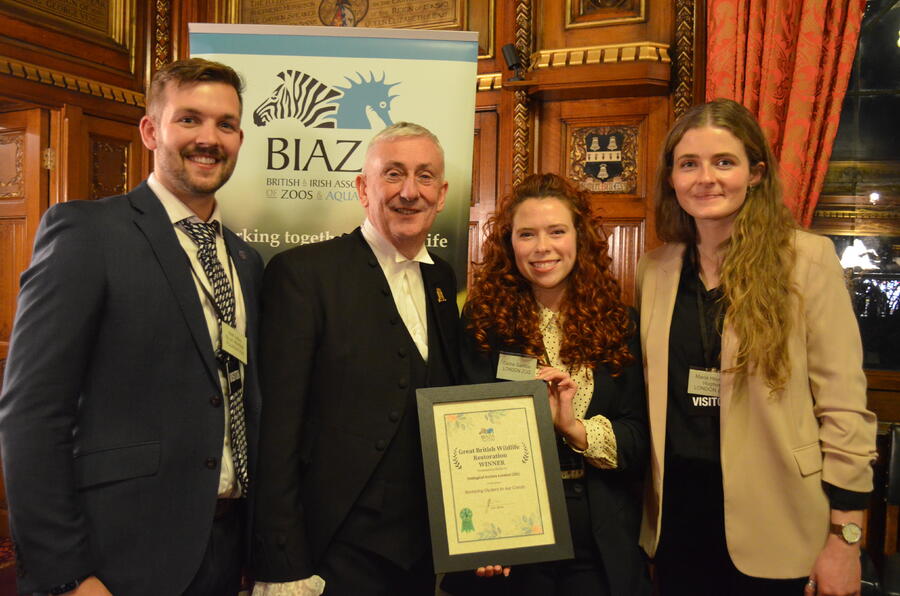
The previous year saw the very first Great British Wildlife Restoration which saw ZSL’s oyster restoration win the most votes from politicians, with projects from Askham Bryan, Twycross Zoo and Chester Zoo also recognised in a reception in Parliament.
The competition is open to BIAZA member zoos and aquariums. Applications close 13 September.
How to apply:
To apply, BIAZA members are asked to fill out the following table and email it to [email protected] by 13 September
|
Name of BIAZA member: |
|
|
Name of project and location: |
|
|
Description of the project (200 words max): |
|
|
Why does this project deserve to win? Why should an MP vote for this project? (100 words max): |
|
|
Contact details: |
|
-
News
.png?w=100&h=100&zc=1&f=jpeg&hash=aad86ef4c29c1be4f7d49d7ddd0ae3d7) Blog: photo competition ignites my childhood wonder for the natural world 4th September, 2026BIAZA’s Andrew Hall reflects on the success of BIAZA’s 2026 Photography Competition and how it speaks to a lifetime of love for nature… …
Blog: photo competition ignites my childhood wonder for the natural world 4th September, 2026BIAZA’s Andrew Hall reflects on the success of BIAZA’s 2026 Photography Competition and how it speaks to a lifetime of love for nature… … -
News
.png?w=100&h=100&zc=1&f=jpeg&hash=b758c447d510c7c32d3c5afb8454dab2) All Things Wild Launches Six-Year Conservation Strategy and ‘More Than Just Your Local Zoo’ Campaign 1st September, 2026All Things Wild has today launched its first-ever six-year Conservation Strategy alongside a new park-wide campaign, ‘More Than Just Your Local…
All Things Wild Launches Six-Year Conservation Strategy and ‘More Than Just Your Local Zoo’ Campaign 1st September, 2026All Things Wild has today launched its first-ever six-year Conservation Strategy alongside a new park-wide campaign, ‘More Than Just Your Local… -
News
.png?w=100&h=100&zc=1&f=jpeg&hash=4466a39223e36e593a9c2b10c32baa71) Family-run Northumberland Zoo begins its next chapter as a registered charity 1st September, 2026After more than a decade of growth, Northumberland Zoo is taking its biggest step yet by becoming a registered charity, creating new opportunities to…
Family-run Northumberland Zoo begins its next chapter as a registered charity 1st September, 2026After more than a decade of growth, Northumberland Zoo is taking its biggest step yet by becoming a registered charity, creating new opportunities to…