
Clean bill of health for tiny hazel dormice
Posted: 4th June, 202410 tiny rare hazel dormice have been given the all-clear by wildlife vets at conservation charity ZSL, ahead of their release into the wild next month.
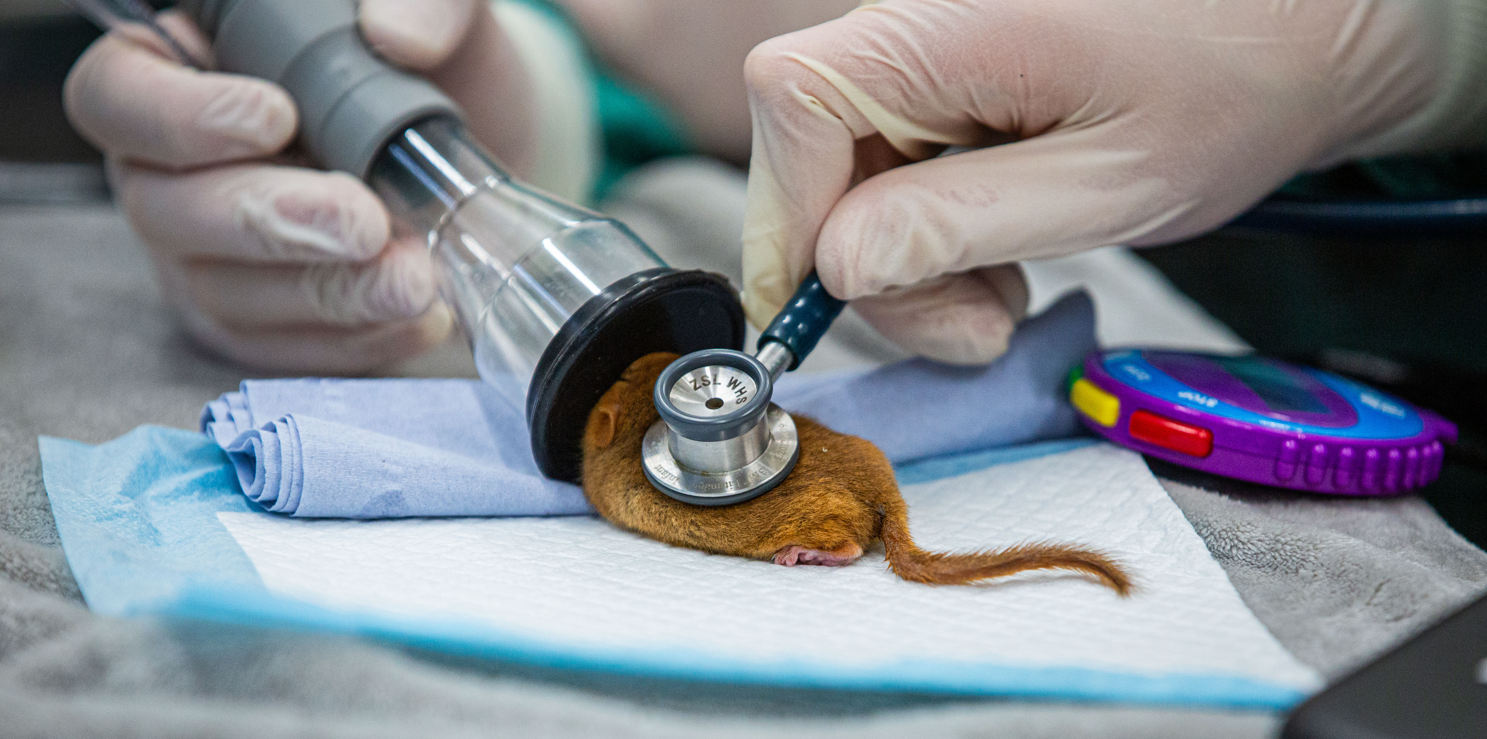
Each 20-gram dormouse had a 10-minute appointment with wildlife vets from ZSL’s Institute of Zoology during which their heart and lungs were checked with a stethoscope, and their eyes, ears, nose, teeth and fur examined. They were also microchipped and x-rayed to check their bones and overall health.
Hazel dormice populations have decreased by a staggering 70% nationally since 2000, but ongoing efforts to restore their populations have seen ore than 1,000 dormice reintroduced into 25 woodland habitats in 13 English counties since 1993.
The health checks are part of ZSL's Disease Risk Analysis and Health Surveillance team’s efforts to ensure that animals being released to the wild are fit and healthy enough to be released to the wild, and that there is no risk of them passing diseases onto local wildlife.
The dormice will be heading to a secret woodland location this summer as part of the annual reintroduction programme led by People’s Trust for Endangered Species - bringing together ZSL, Natural England, Paignton Zoo, the Common Dormouse Captive Breeders Group, and this year Forestry England and The Greensand Trust – to rebuild populations of this native species.
ZSL believes nature can recover, and that conservation is most effective when driven by science. Find out more and support ZSL’s world leading, collaborative science and conservation work at www.zsl.org
Related Members
-
News
 Blog: Unveiling the elusive sea life of Weymouth 19th August, 2026Even local shores are full of secrets, which is why Dr Samantha A. Hook (SEA LIFE) and her team have been uncovering the lives of skates and rays in the…
 -
News
.png?w=100&h=100&zc=1&f=jpeg&hash=d8c1f53f2c350a047de7b916ca514ca3) BIAZA Photo Competition 2026 - the winners! 18th August, 2026The wait is over! BIAZA (The British and Irish Association of Zoos and Aquariums) has announced the winners of its annual photo competition, highlighting…
BIAZA Photo Competition 2026 - the winners! 18th August, 2026The wait is over! BIAZA (The British and Irish Association of Zoos and Aquariums) has announced the winners of its annual photo competition, highlighting… -
News
.png?w=100&h=100&zc=1&f=jpeg&hash=c95bf2b49c3c10b6d10c5c3ff4406bac) Marwell Zoo holds special event to celebrate second International Scimitar-Horned Oryx Day 18th August, 2026Marwell Zoo has celebrated the second International Scimitar-Horned Oryx Day in recognition of the important conservation work it does around the world…
Marwell Zoo holds special event to celebrate second International Scimitar-Horned Oryx Day 18th August, 2026Marwell Zoo has celebrated the second International Scimitar-Horned Oryx Day in recognition of the important conservation work it does around the world…