Double Delight as Pair of Sea Lion Pups Born at Longleat
Posted: 16th June, 2023There’s double cause for celebration at Longleat with the arrival of a pair of adorable sea lion pups.
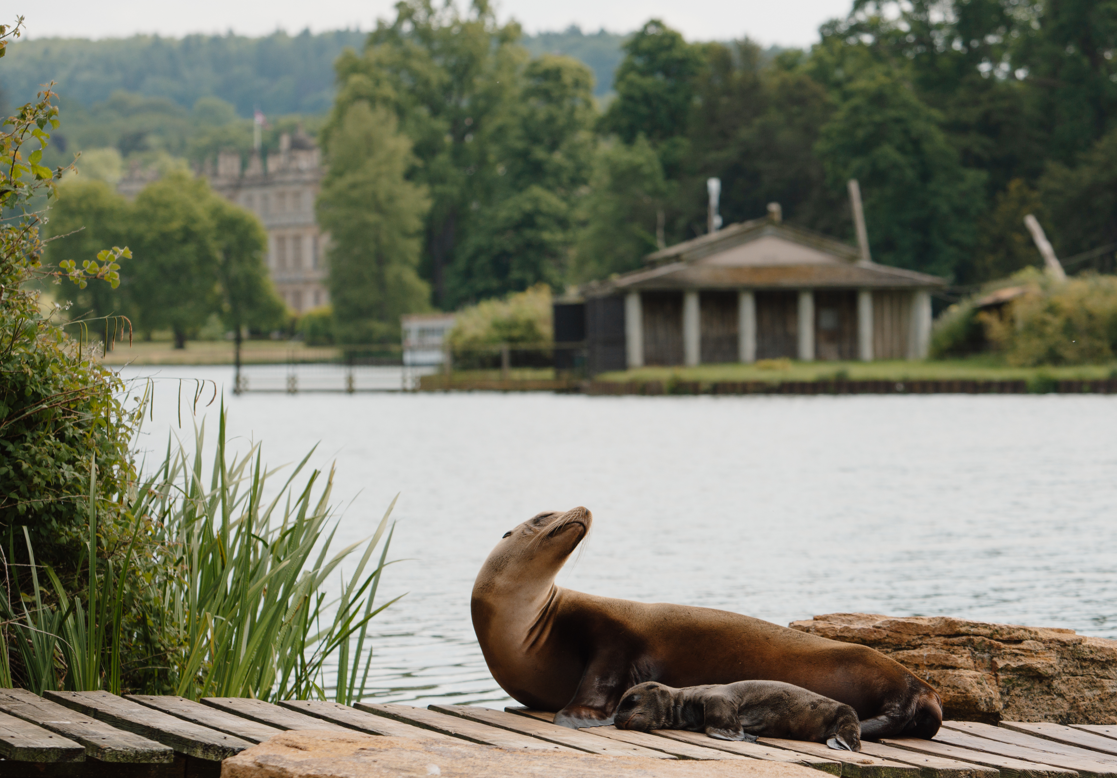
The week-old pups are enjoying basking in the early summer sunshine under the watchful eyes of their mums and providing an unexpected treat for visitors on Longleat’s Boat Safari.
It’s the first time pups have been born at the Wiltshire Safari Park since 2017 and delighted keepers say the pair are thriving.
The pups’ mums Roo, six, and Bella, nine, were themselves born at Longleat and form part of the Safari Park’s hugely successful sea lion breeding programme.
“It’s definitely a proud keeper moment when you witness pups being born to mums who we looked after as pups themselves,” said Keeper Amy Parratt.
“Both mums are extremely attentive and doing an amazing job especially for first time parents. Dad Memphis is a little less involved in day to day care but he’s hanging around and making sure they’re ok.
“These pups represent the first of a new generation of sea lions here at Longleat and we’re keeping our fingers crossed that more may be on the way,” she added.
Sea lions were first introduced into Half Mile Lake in the late 1960s and are believed to be the one of the few colonies of Californian sea lions anywhere in the world to live in freshwater.
Keepers supplement their fish diet - each sea lion eats around three-and-a-half kilos of mackerel a day - with salt tablets to mimic a seawater habitat.
In addition to their regular feed times the sea lions also spend much of their days chasing the lake’s resident freshwater fish – with eels being a particular favourite.
Related Members
-
News
.png?w=100&h=100&zc=1&f=jpeg&hash=b758c447d510c7c32d3c5afb8454dab2) All Things Wild Launches Six-Year Conservation Strategy and ‘More Than Just Your Local Zoo’ Campaign 1st September, 2026All Things Wild has today launched its first-ever six-year Conservation Strategy alongside a new park-wide campaign, ‘More Than Just Your Local…
All Things Wild Launches Six-Year Conservation Strategy and ‘More Than Just Your Local Zoo’ Campaign 1st September, 2026All Things Wild has today launched its first-ever six-year Conservation Strategy alongside a new park-wide campaign, ‘More Than Just Your Local… -
News
.png?w=100&h=100&zc=1&f=jpeg&hash=4466a39223e36e593a9c2b10c32baa71) Family-run Northumberland Zoo begins its next chapter as a registered charity 1st September, 2026After more than a decade of growth, Northumberland Zoo is taking its biggest step yet by becoming a registered charity, creating new opportunities to…
Family-run Northumberland Zoo begins its next chapter as a registered charity 1st September, 2026After more than a decade of growth, Northumberland Zoo is taking its biggest step yet by becoming a registered charity, creating new opportunities to… -
News
.png?w=100&h=100&zc=1&f=jpeg&hash=a533c4e361fe17acb5eb0cc802bd596d) Blog: The smell of success - how Humans and Penguins coexist at Punta San Juan, Peru 24th August, 2026In this week's blog, Lloyd Wilkinson (Senior Aquarist & Penguin Keeper, The Deep) takes us to the shores of Peru to discuss how conservation comes…
Blog: The smell of success - how Humans and Penguins coexist at Punta San Juan, Peru 24th August, 2026In this week's blog, Lloyd Wilkinson (Senior Aquarist & Penguin Keeper, The Deep) takes us to the shores of Peru to discuss how conservation comes…