Four critically endangered Bali starlings hatched at Battersea Park Children’s Zoo
Posted: 22nd September, 2021Head keeper Jamie Baker said:
With fewer than 50 Bali starlings left in their native Indonesian forests, these birds are one of the rarest species on the planet. The devastating effects of trapping for the illegal songbird trade and habitat destruction across Indonesia had almost wiped out this species before modern zoological facilities stepped in to save them.
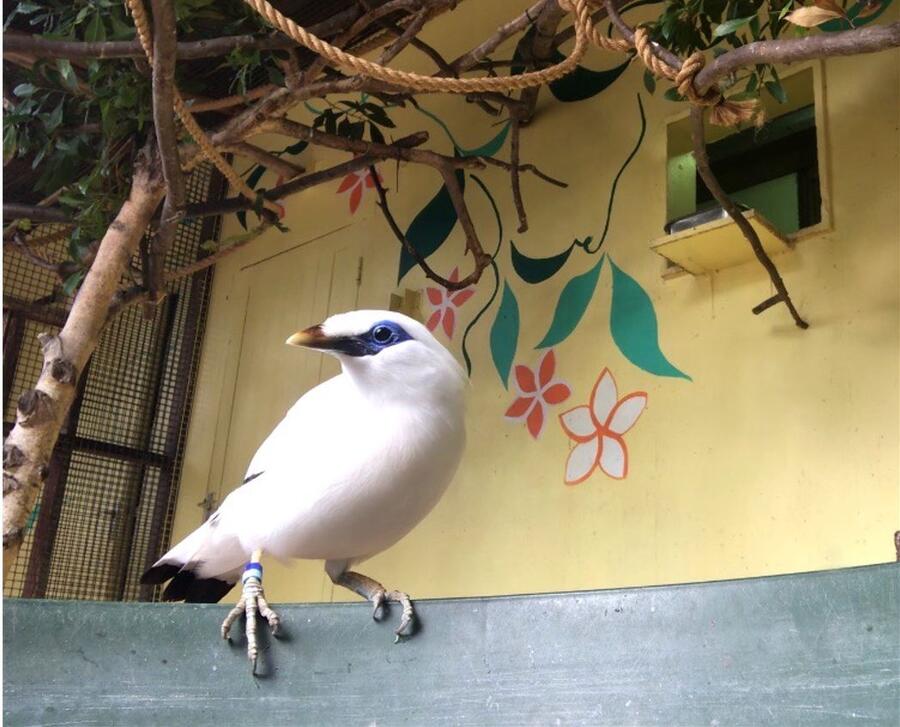
The keeper team are proud to share that Battersea’s resident pair of Bali starlings; Casper and Cleopatra, have had an incredibly successful breeding season, a huge achievement for the European Endangered Species Breeding Programme set up to save them from extinction. In fact, this year BPCZ has been one of the most successful zoos in the UK at breeding these rare tropical birds, with the chicks born at Battersea providing much needed stability for the disappearing species.
The species is renowned for being difficult to pair up and successfully breed, so four chicks is a huge success for the zookeepers at Battersea. It is hoped that once they mature, they will move to other accredited zoos within Europe to support the survival of their species and safeguard a population that could one day return to their native forests.
BPCZ supports a variety of conservation programmes for endangered species across the globe, as well promoting conservation through education; welcoming over 8500 school children to the zoo every year to participate in workshops around adaptations, the food chain, habitats, and animal welfare.
Related Members
-
News
 Defra funds zoo and aquarium conservation projects 10th July, 2026Members of the British and Irish Association of Zoos and Aquariums (BIAZA) will receive Government funding for their efforts to conserve native species.…
 -
News
 BIAZA wins funding for snail conservation project 8th July, 2026Today [8 July], the UK Government has announced Species Recovery Funding for the British and Irish Association of Zoos and Aquariums (BIAZA)’s conservation…
 -
News
 Blair Drummond Safari Park's new lion encounter 7th July, 2026Heart Radio presenters Adele Cunningham and David Farrell officially open new lion house at Blair Drummond Safari Park and launch ‘Breakfast with…