Endangered Diana monkey baby surprises keepers at Paignton Zoo
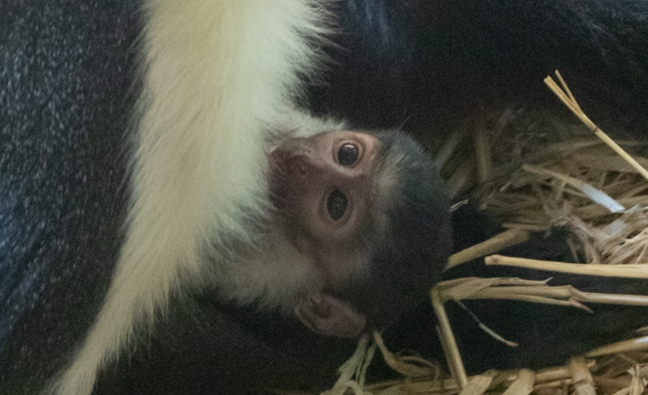
Posted: 10th August, 2022Keepers at Paignton Zoo were welcomed with a surprise when they started work this morning, Tuesday 9 August, as they were greeted by a newborn baby Diana monkey. The baby is the first of the Endangered species to be born at Paignton Zoo in over 10 years, making this arrival even more special.
First-time mother Akea was born at Paignton Zoo in 2006. Keepers knew she was pregnant, but the team were unsure of when she would give birth, so they were pleased spot her cradling the baby this morning.
After a gestation period of around five and a half months, a female Diana gives birth to a single young. Curator of Mammals at Paignton Zoo, Lisa Britton, said about the new addition:
“We are very glad to announce the birth of a baby Diana monkey. Our Dianas are an important part of the breeding programme, so being greeted by Akea and her baby this morning was exciting for the whole team. This was a really special opportunity to see the hours-old baby with its mother.”
Diana monkeys are Old World monkeys that can be found in forests in West Africa. They get their name from the shape of their brow, which is said to resemble the crescent on the bow of the Roman goddess Diana.
The Endangered species are threatened by extensive deforestation for logging and charcoal production, as well as by poaching for their meat and skin. Paignton Zoo’s Diana monkeys are part of a European breeding programme for the species, so this new addition will be a great contribution to the captive population.
Paignton’s Diana monkeys, along with their new addition, can be found in Monkey Heights. For tickets and more information, go to www.paigntonzoo.org.uk.
Related Members
-
News
 Defra funds zoo and aquarium conservation projects 10th July, 2026Members of the British and Irish Association of Zoos and Aquariums (BIAZA) will receive Government funding for their efforts to conserve native species.…
 -
News
 BIAZA wins funding for snail conservation project 8th July, 2026Today [8 July], the UK Government has announced Species Recovery Funding for the British and Irish Association of Zoos and Aquariums (BIAZA)’s conservation…
 -
News
 Blair Drummond Safari Park's new lion encounter 7th July, 2026Heart Radio presenters Adele Cunningham and David Farrell officially open new lion house at Blair Drummond Safari Park and launch ‘Breakfast with…