
Endangered Francois langur baby born at Whipsnade Zoo
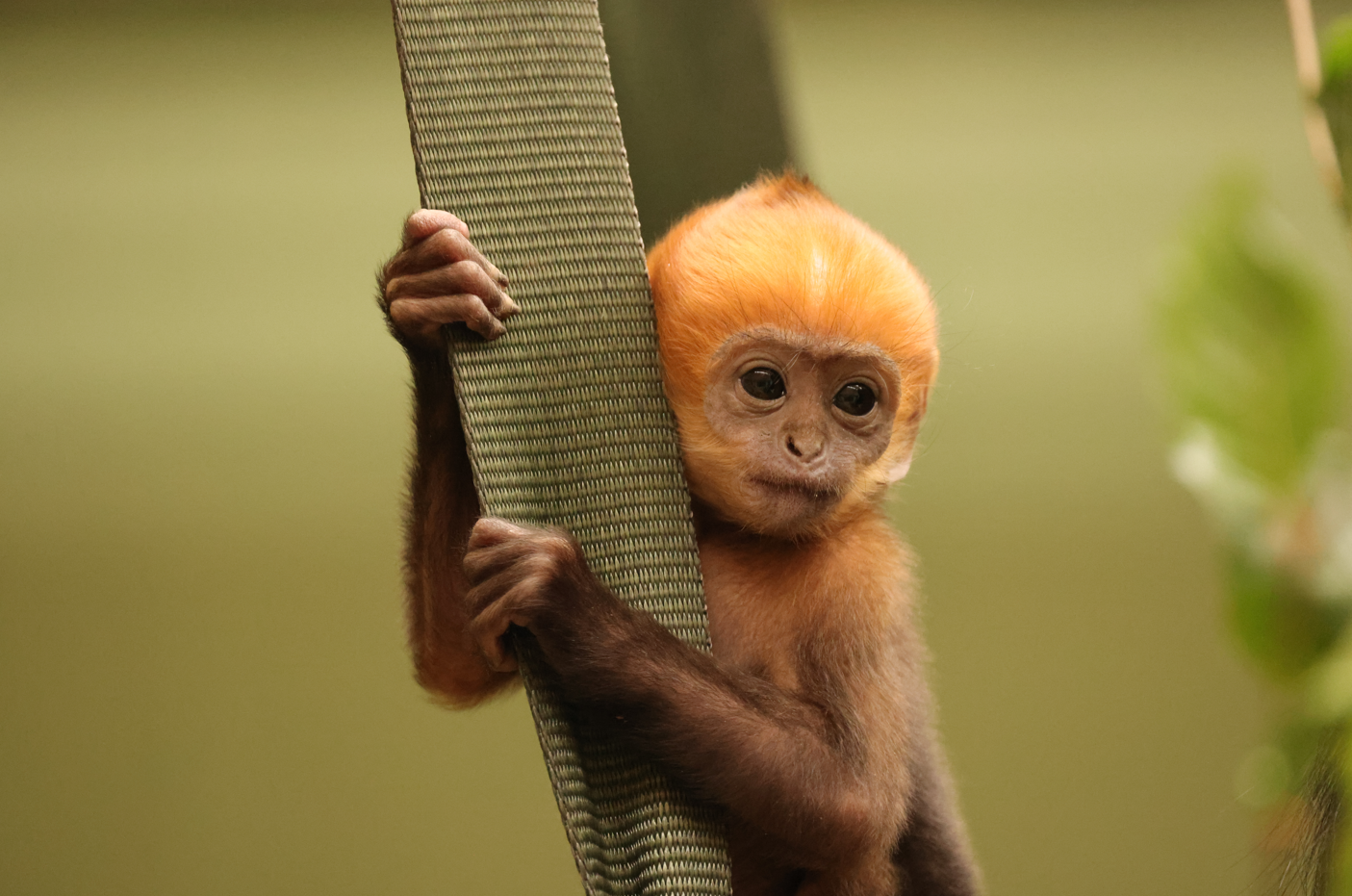
Posted: 4th September, 2023A Francois langur baby pokes his amber head out from his mum’s tender embrace, as Whipsnade zookeepers celebrate the new birth as part of a successful European breeding programme for the Endangered species.
Born at the conservation zoo in the early hours of Sunday 6 August to parents Lee Lee and Wang, zookeeper Hayley Jakeman said the tiny male weighed just over 450g at birth and has remained mostly hidden clinging onto Mum’s belly - but has become more inquisitive this week, allowing the team to snap his stunning portrait for the first time.
“We knew that Lee Lee was pregnant and have been caring for her while patiently waiting for the birth for six months,” said Hayley. “We are over the moon that he is here - growing stronger and more confident by the day - and that visitors can now see him and be inspired to learn more about this Endangered species."
The team have nicknamed the little one ‘Citrus’, due to his brightly-coloured fur, but the team are waiting to get to know the newborn’s personality before deciding on a permanent name.
“While his distinct fur will help visitors to spot Citrus, over the next few months his bright locks will start fading to black. In the meantime, Lee Lee is being the perfect mother, supported by the other females in the troop.”
Hayley explained raising the four-week-old was a joint effort involving the whole troop.
“Francois langurs live in a matriarchal society. Whipsnade Zoo is home to one male langur, Wang, and three females who are essentially the bosses. Visitors will be able to see aunties Nguygen and Lulu helping to care for the youngster, grooming and carrying him around their wooded home.”
Francois langurs (Trachypithecus francoisi) are listed as Endangered on the IUCN Red List of threatened species. Native to China and northern Vietnam, their numbers continue to fall in the wild, making the birth internationally important.
Hayley said. “Citrus is an important addition to the global breeding programme for this Endangered species. Known for their inquisitive expressions and white, prominent ‘sideburns’, it’s vital that we protect these incredible animals.”
“Conservationists estimate there are only 2,000 of these incredible primates left in the wild as a result of illegal hunting for their meat and for traditional medicinal purposes. Caring for a back-up population in zoos is vital to protecting their future.”
ZSL, the conservation charity behind Whipsnade Zoo, works across the world to tackle the illegal wildlife trade, including in Thailand - the largest transport point for the illegal wildlife trade in Southeast Asia. In April, ZSL signed a ground-breaking agreement with the Land Transport Federation of Thailand to help stop the illegal trade of threatened animals - including Francois langurs and other mammals, birds and reptiles, being taken from the wild.
Alongside monitoring activities along trade routes, ZSL experts will work with the LTFT to increase environmental awareness among the 20,000 companies represented by their 10 member associations, encouraging the adoption of zero-tolerance to illegal wildlife trade practices across the country.
Related Members
-
News
.png?w=100&h=100&zc=1&f=jpeg&hash=aad86ef4c29c1be4f7d49d7ddd0ae3d7) Blog: photo competition ignites my childhood wonder for the natural world 4th September, 2026BIAZA’s Andrew Hall reflects on the success of BIAZA’s 2026 Photography Competition and how it speaks to a lifetime of love for nature… …
Blog: photo competition ignites my childhood wonder for the natural world 4th September, 2026BIAZA’s Andrew Hall reflects on the success of BIAZA’s 2026 Photography Competition and how it speaks to a lifetime of love for nature… … -
News
.png?w=100&h=100&zc=1&f=jpeg&hash=b758c447d510c7c32d3c5afb8454dab2) All Things Wild Launches Six-Year Conservation Strategy and ‘More Than Just Your Local Zoo’ Campaign 1st September, 2026All Things Wild has today launched its first-ever six-year Conservation Strategy alongside a new park-wide campaign, ‘More Than Just Your Local…
All Things Wild Launches Six-Year Conservation Strategy and ‘More Than Just Your Local Zoo’ Campaign 1st September, 2026All Things Wild has today launched its first-ever six-year Conservation Strategy alongside a new park-wide campaign, ‘More Than Just Your Local… -
News
.png?w=100&h=100&zc=1&f=jpeg&hash=4466a39223e36e593a9c2b10c32baa71) Family-run Northumberland Zoo begins its next chapter as a registered charity 1st September, 2026After more than a decade of growth, Northumberland Zoo is taking its biggest step yet by becoming a registered charity, creating new opportunities to…
Family-run Northumberland Zoo begins its next chapter as a registered charity 1st September, 2026After more than a decade of growth, Northumberland Zoo is taking its biggest step yet by becoming a registered charity, creating new opportunities to…