New mooring buoys to save seagrass beds
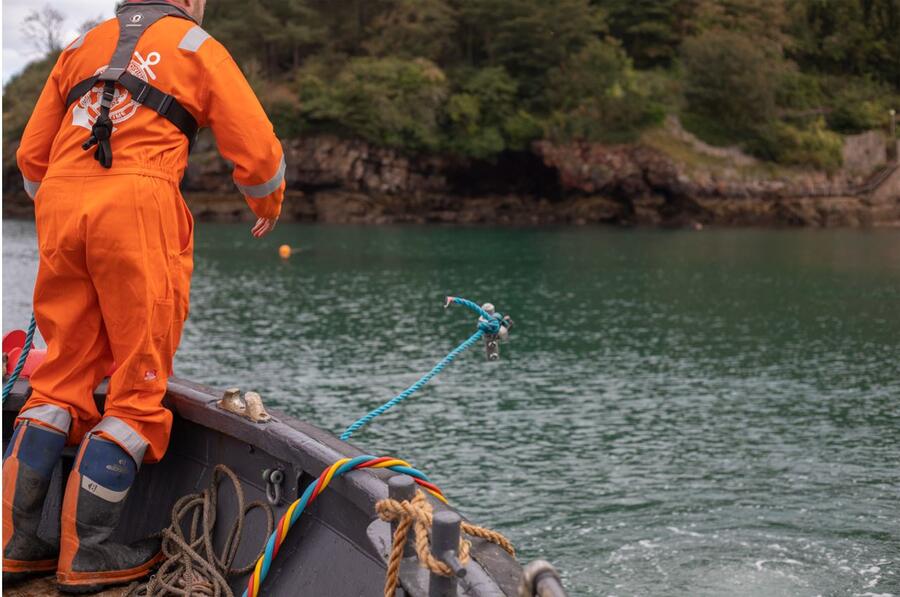
Posted: 15th October, 2021Three brand new boat moorings designed to protect Tor Bay’s seagrass meadows have been installed at Fishcombe Cove. These are the first of their kind in Tor Bay.
Wild Planet Trust has installed the mooring buoys as part of the #SaveOurSeagrass campaign established in 2018. The campaign has been supported by Totnes-based underwater measuring instrument manufacturer, Valeport. Along with other funders, this support has also enabled a dedicated group of volunteer divers to monitor the Tor Bay seagrass beds to determine the best place for moorings and survey the health of our seagrass.
Seagrass is the only group of flowering plants that can live in seawater. Producing flowers, pollen, and seeds while submerged. They can spread across large areas and create the appearance of an underwater meadow full of a huge diversity of species. The ecological importance of seagrass as a habitat is widely recognised and it’s even protected by law in many countries. It plays a huge role in carbon capture and coastal protection.
The meadows in Tor Bay are a vital nursery bed for young fish and home to both the UK seahorse species , the spiny and short-snouted seahorse. Shallow, sheltered coastal bays provide ideal conditions for the growth of seagrass meadows, but for this reason they are also attractive mooring and anchorage sites for boating communities.
Both boat anchors and traditional mooring systems have a detrimental impact on seagrass. Anchors pull up the seagrass roots and mooring chains move across the seabed with the changing tides and currents scouring the seabed of life, resulting in immense damage to the habitat.
Although the seagrass areas in Tor Bay are voluntary no-anchoring zones, Wild Planet Trust is actively looking to encourage water enthusiasts and boat users to respect the seagrass by not anchoring at the known seagrass locations and use these new permitted moorings.
“Anchoring in the wrong place damages the seagrass and threatens the wildlife that live amongst it” said Dr Tracey Hamston, Conservation Officer at Wild Planet Trust. “We are delighted to introduce these new moorings which will enable boat users to moor up, whilst protecting the seagrass below.”
The design of this new mooring system means damage to seagrass is prevented as the mooring chains are suspended above the seabed. “It’s a win win situation.”
The main Seagrass meadows in Tor Bay are located in: Fishcombe/Churston Cove; Elberry cove/Broadsands; Torre Abbey, Millstones/Beacon cove, Hope Cove and off Breakwater beach.
Slot GacorRelated Members
-
News
 Defra funds zoo and aquarium conservation projects 10th July, 2026Members of the British and Irish Association of Zoos and Aquariums (BIAZA) will receive Government funding for their efforts to conserve native species.…
 -
News
 BIAZA wins funding for snail conservation project 8th July, 2026Today [8 July], the UK Government has announced Species Recovery Funding for the British and Irish Association of Zoos and Aquariums (BIAZA)’s conservation…
 -
News
 Blair Drummond Safari Park's new lion encounter 7th July, 2026Heart Radio presenters Adele Cunningham and David Farrell officially open new lion house at Blair Drummond Safari Park and launch ‘Breakfast with…