
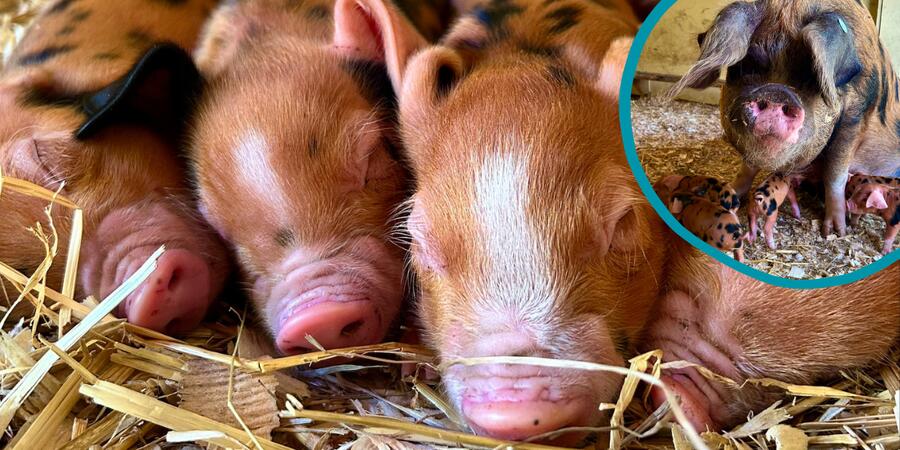

Rare Oxford Sandy and Black Piglets Born at Battersea Park Children's Zoo
Posted: 3rd July, 2025New arrivals mark significant milestone in conservation efforts for rare native British breed.
Battersea Park Children's Zoo is delighted to announce the arrival of a very special litter of Oxford Sandy and Black piglets, born to resident sow Ruth on 15th June 2025.
With fewer than 350 individuals of this native British breed remaining worldwide, every new arrival represents a huge step forward in the effort to save them from extinction. The zoo works closely with the Oxford Sandy and Black Pig Society to protect and promote this rare and beautiful breed, playing a vital role in securing its future.
Battersea Park Children's Zoo is dedicated to the conservation of native rare breeds, which represent a vital part of Britain's agricultural and cultural heritage. Many of these breeds are at risk of disappearing due to industrial farming practices and changes in agricultural demand.
"Preserving native breeds helps maintain genetic diversity, which is essential for the resilience of livestock and agricultural systems in the face of climate change and other challenges," explained Zoo Manager, Jamie Baker.
"Additionally, native breeds often contribute to the management of traditional landscapes, supporting biodiversity in rural areas."
"When we have piglets born at the zoo, it's always a joy to watch them grow, explore, and eventually contribute to their breed's survival story."
This marks the fourth litter born at the zoo, with BPCZ-born piglets having moved to farms across the UK to strengthen and diversify the national population of this critically endangered breed.
The piglets are currently staying close to their mother but will soon be following Ruth around the paddock, snuffling through straw and charming visitors with their distinctive floppy ears and famous ginger coats.
Members of the public can visit Ruth and her adorable new arrivals at the zoo's piggery. Daily pig talks with keepers take place at 1:30pm
Related Members
-
News
.png?w=100&h=100&zc=1&f=jpeg&hash=a9c00126b17a2a2a60a114638c8dbe92) Blog: keeping members close - why good communication matters 10th September, 2026BIAZA Corporate Associate Romax on why communication is the key ingredient to a good relationship with members: Most membership teams know the feeling.…
Blog: keeping members close - why good communication matters 10th September, 2026BIAZA Corporate Associate Romax on why communication is the key ingredient to a good relationship with members: Most membership teams know the feeling.… -
News
.png?w=100&h=100&zc=1&f=jpeg&hash=aad86ef4c29c1be4f7d49d7ddd0ae3d7) Blog: photo competition ignites my childhood wonder for the natural world 4th September, 2026BIAZA’s Andrew Hall reflects on the success of BIAZA’s 2026 Photography Competition and how it speaks to a lifetime of love for nature… …
Blog: photo competition ignites my childhood wonder for the natural world 4th September, 2026BIAZA’s Andrew Hall reflects on the success of BIAZA’s 2026 Photography Competition and how it speaks to a lifetime of love for nature… … -
News
.png?w=100&h=100&zc=1&f=jpeg&hash=b758c447d510c7c32d3c5afb8454dab2) All Things Wild Launches Six-Year Conservation Strategy and ‘More Than Just Your Local Zoo’ Campaign 1st September, 2026All Things Wild has today launched its first-ever six-year Conservation Strategy alongside a new park-wide campaign, ‘More Than Just Your Local…
All Things Wild Launches Six-Year Conservation Strategy and ‘More Than Just Your Local Zoo’ Campaign 1st September, 2026All Things Wild has today launched its first-ever six-year Conservation Strategy alongside a new park-wide campaign, ‘More Than Just Your Local…