
BIAZA wins funding for snail conservation project
Posted: 8th July, 2026Today [8 July], the UK Government has announced Species Recovery Funding for the British and Irish Association of Zoos and Aquariums (BIAZA)’s conservation project to save the rare glutinous snail. The wildlife charity is coordinating emergency efforts across several member zoos and aquariums, to save this unusual native snail species. The project has been awarded just over £50,000 and is one of 130 funded projects, benefiting 364 species, announced by Defra.
Known to exist in only one remaining location in the UK, BIAZA has worked with ecologist Ian Hughes, to remove a small number of these precious and poorly understood snails and to establish breeding populations in a small number of BIAZA zoos. These new breeding colonies will boost understanding of their ecology, and present options for reintroducing this species to suitable habitats in England.
Nicky Needham, Head of Conservation at BIAZA and project lead said: “This little snail was once wide-spread across the UK and it will take urgent action to prevent it from disappearing entirely. All species play a vital role in giving us a healthy environment, and our freshwater habitats are increasingly threatened. So, I am delighted that so many BIAZA member zoos have stepped in to lend their expertise to save this glittering snail.”
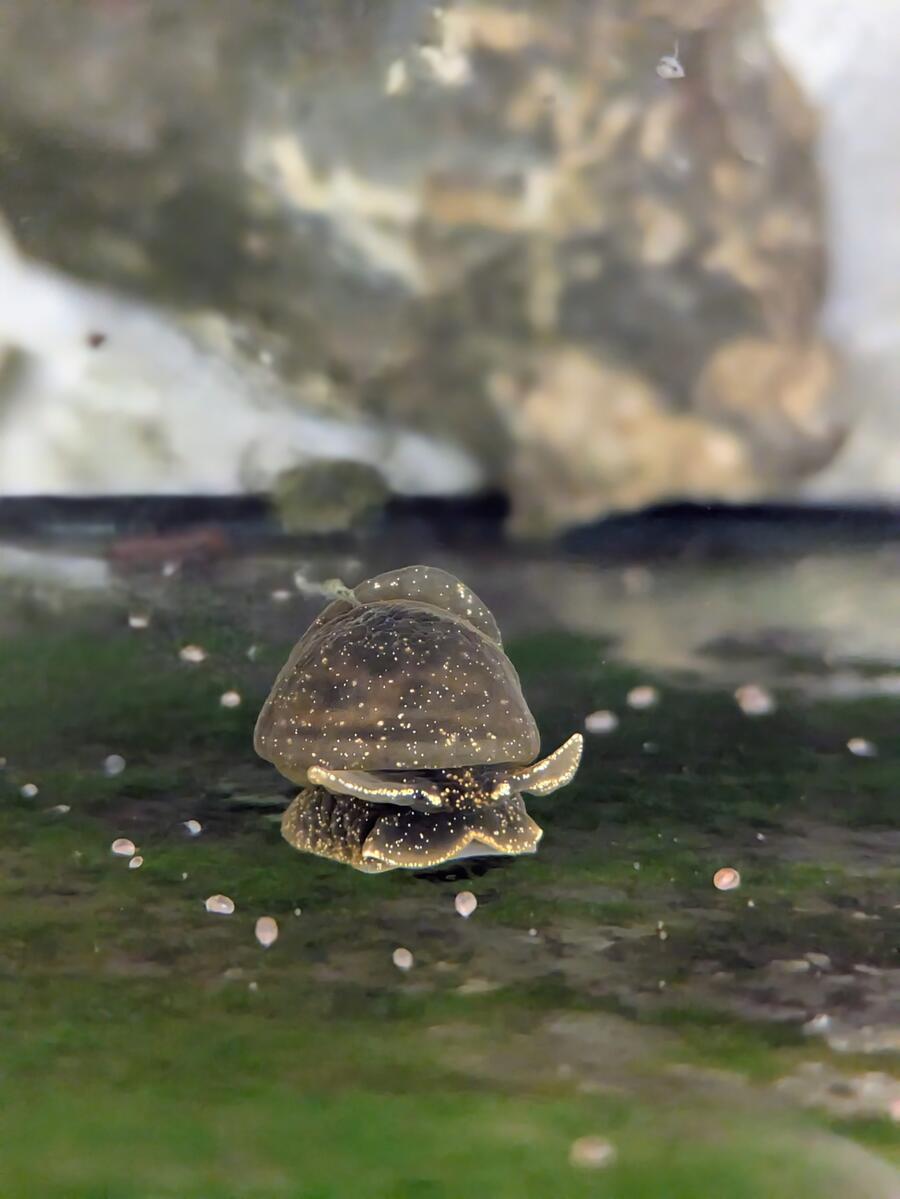
Glutinous snails are a small, freshwater species that feast on types of algae. The snails have comically large antennae and are unusual in that their mantle wraps all around their shell, appearing to glitter, but leading to their less than flattering name! These precious snails are now being bred in bio-secure facilities at Dudley Zoo & Castle, Askham Bryan Wildlife and Conservation Park, Longleat Safari, Wingham Wildlife Park and Chester Zoo. The next stage of the project will be to build up a sustainable population of the snail, to learn more about their behaviour and ecology, and then to find potential sites for their reintroduction in England.
Glutinous snail conservation is just one example of the diverse work undertaken by zoos and aquariums to save Britain’s wildlife, including the reintroduction of hazel dormice by Twycross Zoo, planting of entire seagrass beds by the Ocean Conservation Trust, and the release of the 58 of the UK’s most threatened butterfly the pearl-bordered fritillary in the Malvern Hills earlier this year by Evesham’s All Things Wild.
Related Members
-
News
.png?w=100&h=100&zc=1&f=jpeg&hash=aad86ef4c29c1be4f7d49d7ddd0ae3d7) Blog: photo competition ignites my childhood wonder for the natural world 4th September, 2026BIAZA’s Andrew Hall reflects on the success of BIAZA’s 2026 Photography Competition and how it speaks to a lifetime of love for nature… …
Blog: photo competition ignites my childhood wonder for the natural world 4th September, 2026BIAZA’s Andrew Hall reflects on the success of BIAZA’s 2026 Photography Competition and how it speaks to a lifetime of love for nature… … -
News
.png?w=100&h=100&zc=1&f=jpeg&hash=b758c447d510c7c32d3c5afb8454dab2) All Things Wild Launches Six-Year Conservation Strategy and ‘More Than Just Your Local Zoo’ Campaign 1st September, 2026All Things Wild has today launched its first-ever six-year Conservation Strategy alongside a new park-wide campaign, ‘More Than Just Your Local…
All Things Wild Launches Six-Year Conservation Strategy and ‘More Than Just Your Local Zoo’ Campaign 1st September, 2026All Things Wild has today launched its first-ever six-year Conservation Strategy alongside a new park-wide campaign, ‘More Than Just Your Local… -
News
.png?w=100&h=100&zc=1&f=jpeg&hash=4466a39223e36e593a9c2b10c32baa71) Family-run Northumberland Zoo begins its next chapter as a registered charity 1st September, 2026After more than a decade of growth, Northumberland Zoo is taking its biggest step yet by becoming a registered charity, creating new opportunities to…
Family-run Northumberland Zoo begins its next chapter as a registered charity 1st September, 2026After more than a decade of growth, Northumberland Zoo is taking its biggest step yet by becoming a registered charity, creating new opportunities to…